The First-Time Investor’s Guide to Ground-Up Real Estate Development
In the world of real estate, there are two primary paths to growth: transforming what already exists or building something entirely new. While renovations offer a faster turnaround, ground-up development (the process of constructing a real estate asset from scratch on raw or cleared land) represents the pinnacle of value creation.
For new investors and business owners, ground-up development is more than just a construction project; it is an exercise in vision, patience, and strategic risk management.
Why Choose Ground-Up Development?
The most significant advantage of starting from zero is unlimited flexibility. Unlike redevelopment, where you are often restricted by pre-existing structural bones or outdated layouts, ground-up projects allow you to optimize for modern demand. You can build specifically for current market needs, such as energy-efficient "green" buildings or layouts optimized for remote work.
Furthermore, new constructions typically attract higher-quality tenants, command premium rents, and hold higher long-term resale value compared to older assets.
The 5 Essential Stages of the Development Lifecycle
Success in ground-up development isn't found in the "breaking of ground" but in the months of preparation that precede it (Pisoni, 2024).
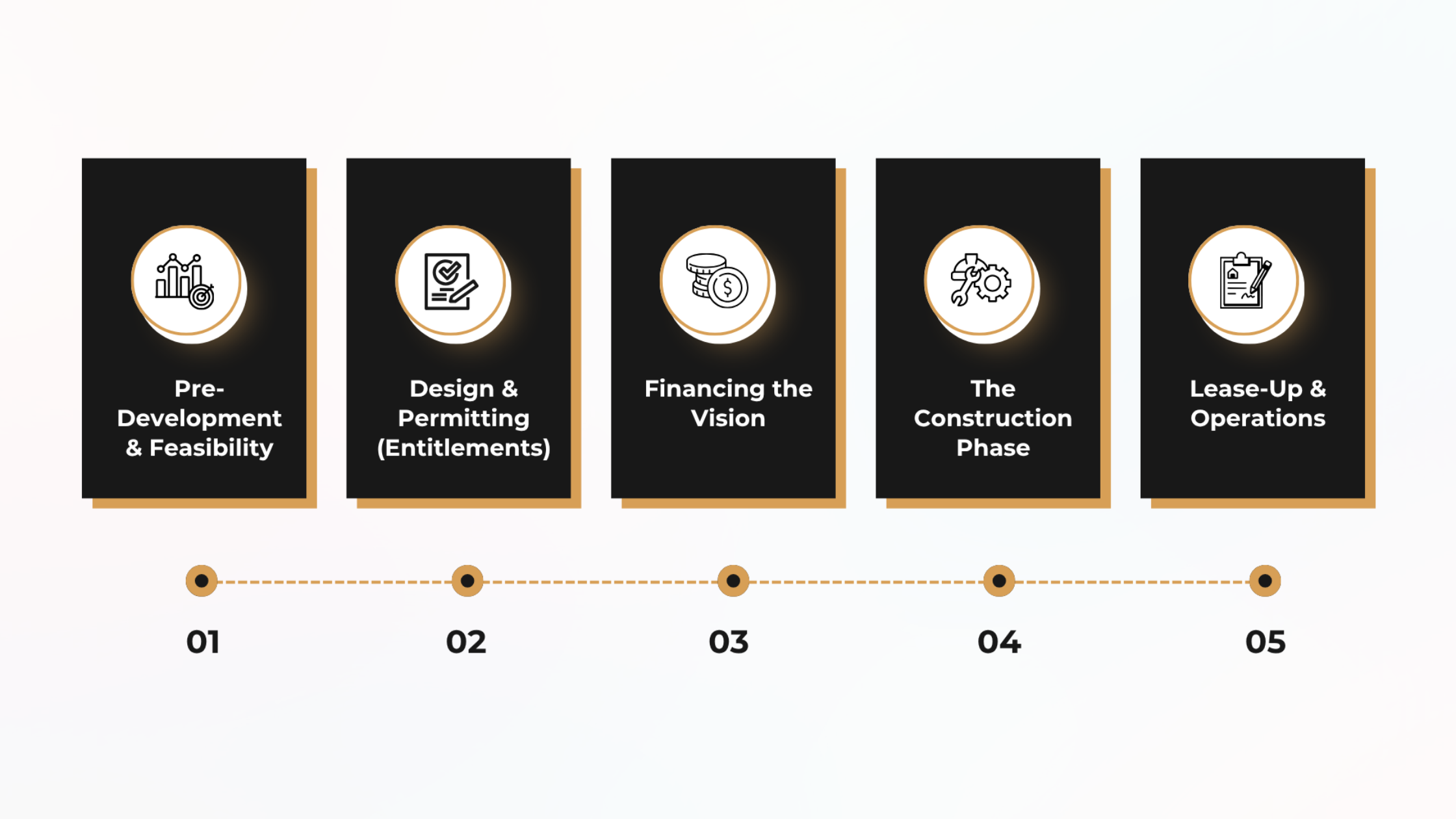
Pre-Development & Feasibility: This is the "make or break" phase. Investors must conduct deep market research to ensure the intended product matches local demand. A key action here is performing a soil and topography analysis; an empty lot might look perfect, but hidden drainage issues can add significant costs to your budget.
Design & Permitting (Entitlements): This stage involves securing the "right to build." You will work with architects and engineers to finalize blueprints while navigating local planning committees. According to industry insights from Deloitte’s 2026 CRE Outlook, regulatory hurdles remain a primary concern for the majority of global investors, making a seasoned legal and architectural team non-negotiable.
Financing the Vision: Ground-up projects are capital-intensive. Most developers use a mix of equity (capital from partners) and debt. Construction loans are often structured differently than traditional mortgages, focusing on "draws" based on construction milestones.
The Construction Phase: This is the physical manifestation of your plan. It starts with site preparation and moves through framing and roofing. To manage risk, many investors prefer Guaranteed Maximum Price (GMP) contracts to limit exposure to volatile material costs.
Lease-Up & Operations: The final goal is reaching a "stabilized" state, where the building is occupied and generating cash flow.
Risk vs. Reward: The Investor’s Reality
Ground-up development is often cited as one of the riskiest investment types because capital is committed long before revenue is realized (Aker Development, 2025). However, the rewards reflect that risk. Expert projections suggest that well-executed ground-up projects can yield internal rates of return (IRR) in the high teens to low twenties, often doubling an investor's initial capital over a 3 to 5 year cycle.

Current trends in 2026 show a shift toward specialized housing and sustainable, inclusive communities. Data from the Department of Human Settlements and Urban Development (DHSUD) indicates that real estate continues to be a top-tier hedge against inflation, providing a "portability of value" that few other assets can match.
Ground-up development is a marathon, not a sprint. It requires a mindset of "prioritization triage," which is the ability to solve problems as they arise while keeping the long-term vision in focus. For those who have the patience to navigate the entitlement process and the vision to see a finished community where others see only dirt, the potential for wealth generation is unparalleled.
References
Aker Development. (2025). Real estate development: Understanding risk vs. reward. https://www.akerdevelopment.com/blog/risk-vs-reward
Deloitte. (2025). 2026 Commercial real estate outlook: Finding a new baseline. Deloitte Center for Financial Services. https://www2.deloitte.com/us/en/pages/real-estate/articles/commercial-real-estate-industry-outlook.html
Department of Human Settlements and Urban Development (DHSUD). (2025). Housing and urban development strategic plan 2023-2028: Annual progress report. Republic of the Philippines. https://dhsud.gov.ph/
Holiday, R. (2016). The daily stoic: 366 meditations on wisdom, perseverance, and the art of living. Portfolio/Penguin.
Pisoni, A. (2024). The five stages of the real estate development process. Sharestates University. https://www.sharestates.com/blog/5-stages-real-estate-development-process/
